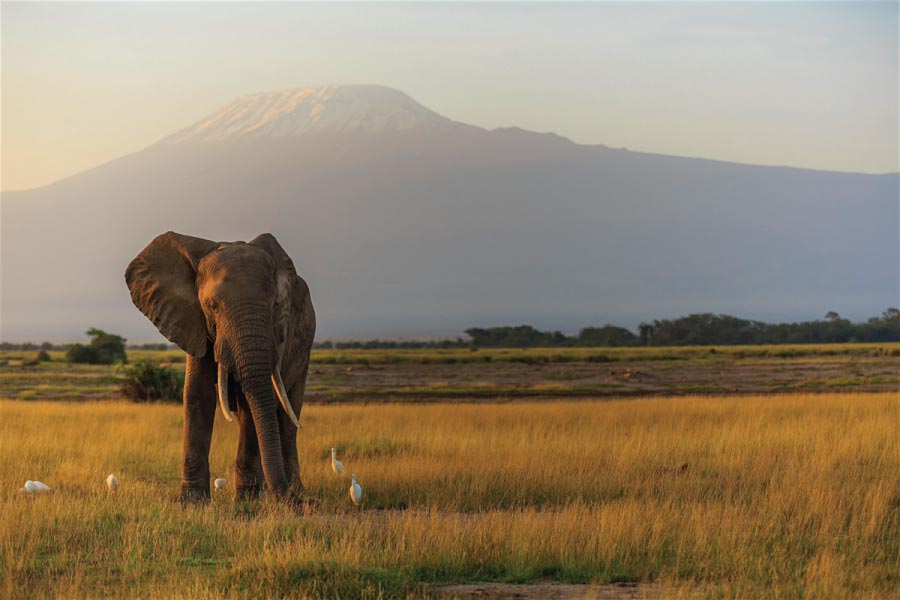
Climbing Mount Kilimanjaro
Climbing Kilimanjaro is the ultimate bucket-list adventure in Africa.
Key trekking routes include:
- Machame Route (most popular and scenic)
- Marangu Route (hut accommodation option)
- Lemosho Route (best for acclimatization)
- Rongai Route (quieter northern approach)
Climbers pass through multiple ecosystems:
- Tropical rainforest
- Heather and moorland
- Alpine desert
- Arctic summit zone
Reaching Uhuru Peak (5,895m) is a once-in-a-lifetime achievement for many travelers.
Wildlife in Kilimanjaro National Park
Although primarily a trekking destination, Kilimanjaro National Park also supports diverse wildlife.
Animals found include:
- Blue monkeys and colobus monkeys
- Bush babies and hyraxes
- Elephants (lower forest zones)
- Buffalo and leopards (rare sightings)
- Various antelope species
Wildlife is most commonly seen in the lower forest belt.
Bird Watching on Mount Kilimanjaro
Kilimanjaro is home to over 150 bird species, making it a rewarding destination for bird lovers.
Common species include:
- White-necked raven
- African fish eagle
- Gabar goshawk
- Hornbills and sunbirds
- Long-tailed trogon
- African pygmy kingfisher
The best birding season is November to April, when migratory species are present.
Top Activities in Kilimanjaro National Park
1. Mountain Climbing
The main attraction, offering multi-day trekking to Africa’s highest peak.
2. Nature Walks
Guided forest walks on the lower slopes to explore flora and fauna.
3. Cycling Adventures
Mountain biking along the Kilema route through Chagga farmlands.
4. Camping Experiences
Stay at designated campsites along trekking routes for an authentic mountain experience.
5. Photography & Filming
Kilimanjaro’s landscapes make it ideal for documentaries, films, and adventure photography.
6. Cultural Tours
Visit the Chagga communities living on the mountain slopes.
Best Time to Climb Kilimanjaro
- Dry Seasons (January–March & June–October): Best climbing conditions
- Wet Seasons (April–May & November): Fewer crowds but challenging trails
Clear skies and stable weather make the dry season ideal for summit attempts.
How to Get to Kilimanjaro National Park
By Air
- Fly into Kilimanjaro International Airport (JRO)
- Direct connections from Europe and major African cities
By Road
- About 1 hour from Kilimanjaro Airport to Moshi
- Around 2–3 hours from Arusha safari hub
Kilimanjaro Safari Accommodation
Accommodation ranges from mountain camps to luxury lodges around Moshi and Arusha.
Luxury Camps & Lodges
- Scenic views of Mount Kilimanjaro
- Private safari experiences
- High-end comfort and dining
Tented Camps
- Authentic wilderness experience
- Close to trekking starting points
- Ideal for climbers and adventurers
Recommended Stays
- Kambi ya Tembo (elephant camp with Kilimanjaro views)
- Ndarakwai Ranch Camp (conservation-focused lodge)
- Shu’mata Camp (luxury Maasai-style safari camp)
Cultural Experiences Around Kilimanjaro
Visitors can explore the rich heritage of the Chagga and Maasai communities:
- Traditional homesteads and farming systems
- Local coffee tours
- Cultural dances and storytelling
- Handcrafted souvenirs
Sample Kilimanjaro Climbing Itinerary (7 Days)
Day 1: Arrival in Moshi / Arusha
Day 2: Start trek through rainforest zone
Day 3–5: Ascend through moorland and alpine zones
Day 6: Summit attempt to Uhuru Peak
Day 7: Descent and return
Final Thoughts
Kilimanjaro National Park is more than a trekking destination—it is a global icon of adventure, endurance, and natural beauty. Whether you aim to reach the summit or explore its scenic lower slopes, Kilimanjaro offers one of the most unforgettable travel experiences in the world.