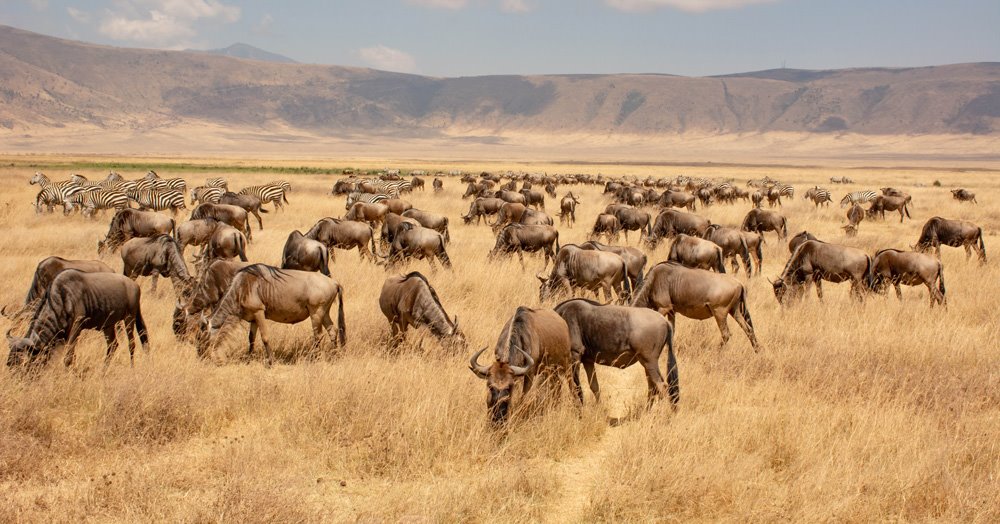
Wildlife Experience in Ngorongoro Crater
Ngorongoro is globally famous for its exceptional wildlife concentration. Unlike migratory parks, animals remain inside the crater year-round due to permanent water sources and fertile grazing land.
Common wildlife includes:
- Lions (including famous black-maned lions)
- Elephants and buffalo herds
- Rare black rhinos
- Hyenas, jackals, and cheetahs
- Zebras, wildebeests, and gazelles
The crater is one of the few places in Africa where visitors can realistically spot all members of the Big Five in a single game drive.
Bird Watching in Ngorongoro Conservation Area
With over 500 recorded bird species, Ngorongoro is a paradise for bird lovers. Key birding habitats include lakes, wetlands, forests, and crater rims.
Notable bird species:
- Flamingos at seasonal lakes
- Ostriches and guinea fowl
- Tawny eagles and vultures
- Weaver birds and waterfowl
Birdwatching is especially rewarding around Lake Magadi and Empakaai Crater.
Top Attractions Around Ngorongoro Crater
1. Empakaai Crater
A smaller but equally stunning crater known for its turquoise soda lake and flamingo populations.
2. Olduvai Gorge Museum
One of the most important archaeological sites in the world is often referred to as the “Cradle of Mankind.”
3. Maasai Cultural Villages
Experience authentic Maasai traditions, including traditional homesteads, dances, and cultural storytelling.
4. Ngorongoro Crater Floor
The main highlight is offering unmatched wildlife viewing and breathtaking landscapes.
5. Laetoli Footprints Site
Famous for ancient hominid footprints dating back over 3 million years.
Best Time to Visit Ngorongoro Crater
Ngorongoro is a year-round safari destination:
- Dry Season (June–September): Best wildlife visibility and game viewing
- Wet Season (November–May): Lush landscapes, birdwatching, and fewer crowds
Both seasons offer unique safari experiences depending on the traveler's preference.
Ngorongoro Safari Accommodation Options
The area offers a wide range of lodges and camps, from luxury to budget-friendly options. Many are located on the crater rim, offering breathtaking sunrise and sunset views.
Popular accommodation experiences include:
- Luxury safari lodges with panoramic crater views
- Mid-range safari camps with guided wildlife experiences
- Budget lodges for affordable Tanzania safaris
Recommended 3-Day Ngorongoro Safari Itinerary
Day 1: Arrival and Transfer to Ngorongoro
Arrive in northern Tanzania and transfer to Ngorongoro Conservation Area. Afternoon relaxation and overnight stay at a lodge.
Day 2: Full-Day Crater Game Drive
Descend into the crater for a full-day safari experience with picnic lunch and Big Five game viewing.
Day 3: Olduvai Gorge & Return to Arusha
Visit Olduvai Gorge before returning to Arusha, marking the end of the safari.
How to Access Ngorongoro Crater
- From Arusha: Approximately 3–4 hours by road
- From Kilimanjaro International Airport: About 4 hours
- Nearest airstrip: Lake Manyara Airstrip
Combine Ngorongoro with a Serengeti Safari
For the ultimate Tanzania safari experience, Ngorongoro is often combined with the nearby Serengeti National Park, offering a complete journey through Africa’s most famous wildlife ecosystems.
Final Thoughts
The Ngorongoro Crater Conservation Area remains one of the most extraordinary safari destinations in the world. Its unique ecosystem, rich wildlife population, and cultural heritage make it a top choice for travelers seeking a true African safari adventure.